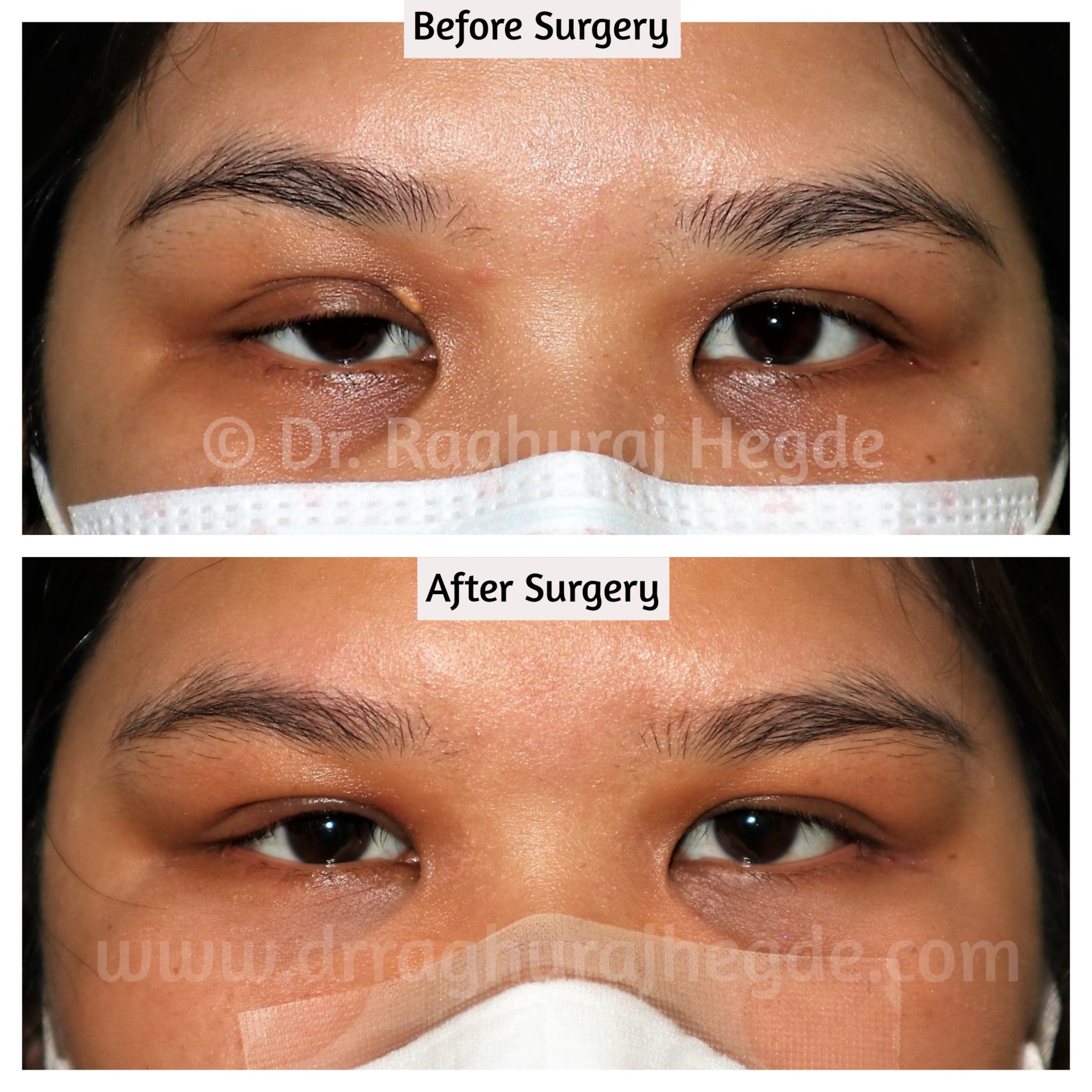
How do you correct hereditary acquired droopy eyelids?

Chronic progressive external ophthalmoplegia (CPEO) describes an spectrum of hereditary myopathies affecting extraocular muscles (EOMs)   commonly manifesting as bilateral ptosis and near total external ophthalmoplegia. 

As the name suggests, it is a chronic, progressive, bilateral, typically symmetric, and external (i.e., spares the pupil) ophthalmoplegia. CPEO is associated with mitochondrial disease and can occur as isolated oculomotor symptoms (isolated CPEO) or in conjunction with other systemic findings (“CPEO-plus”). Depending on additional clinical features, CPEO can be evaluated as part of a systemic myopathic or neurologic syndrome
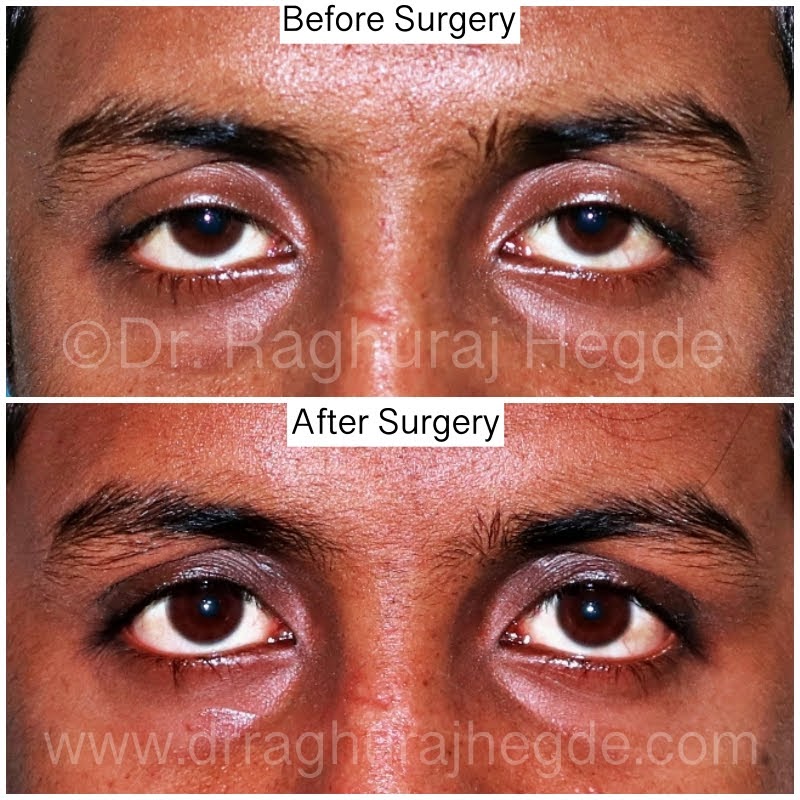
Your eyes reflects your personality

Ptosis can be easily treated with a day care, single sitting surgery and sometimes there need not even be a external skin incision. The surgery is known as conjunctivo-mullerectomy where the ptosis (droopy eyelid) is corrected using an incision on the wet surface of the eyelid.

An Eye for an Eye!

Hering’s Law for the eyelids: There is reflexive descent of the contralateral upper eyelid after the ipsilateral surgical correction of unilateral ptosis. Hering’s law is explained by considering the two eyes as paired organs and it follows that the muscles moving it will work in co-ordination.

Opening the window to the World

Droopy Eyelid Surgery or Ptosis correction surgery is more art than science. I’m sure all Oculoplastic Surgeons agree it is a challenge to treat patients with ptosis. Each case is so different that it is almost feels like you are starting from scratch. While challenging, it is also among the most satisfying Oculoplastic conditions to treat.